

Semaglutide & Tirzepatide For Weight Loss
Semaglutide for weight loss compared to tirzepatide for weight loss
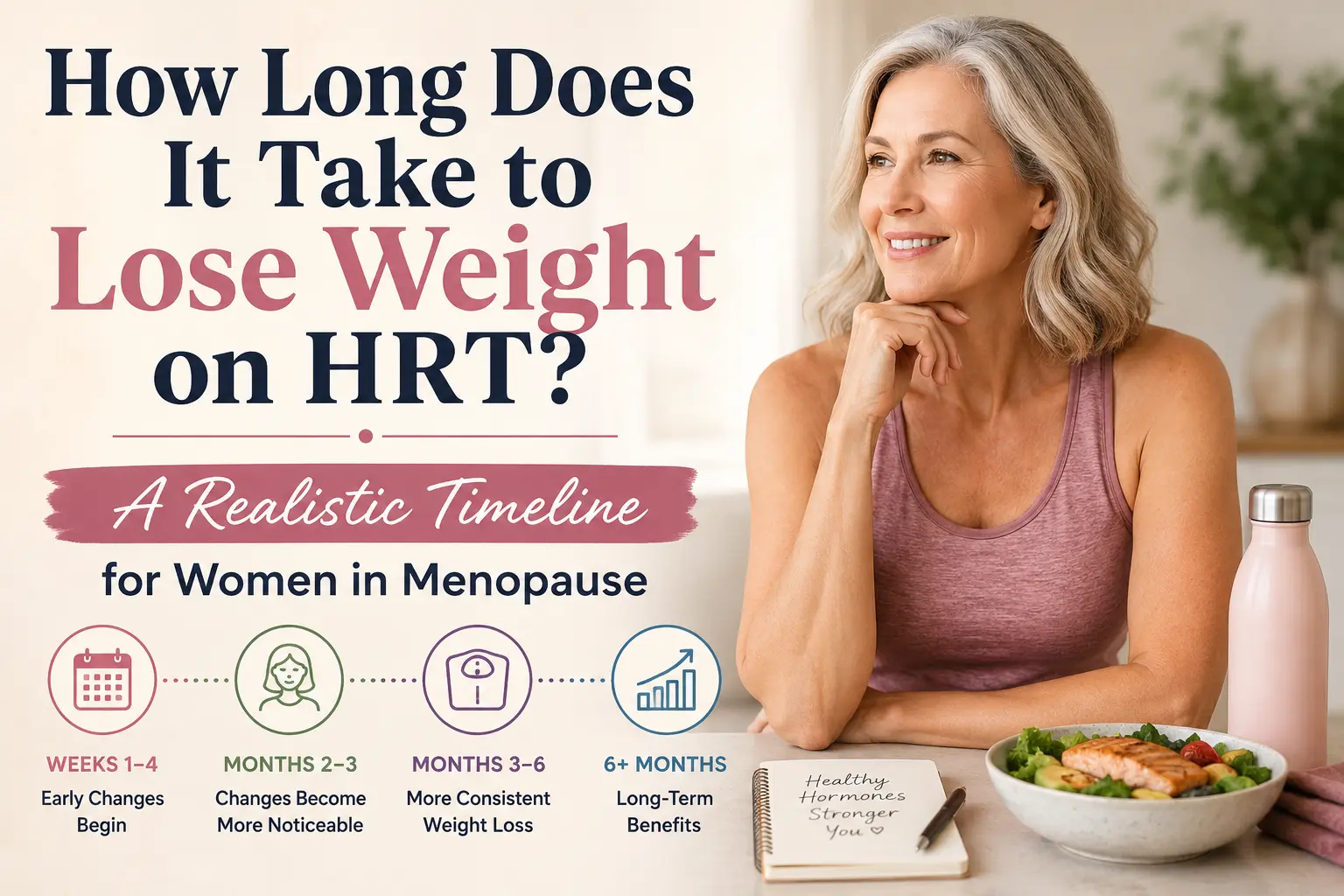
If you’ve recently started hormone replacement therapy (HRT) or are thinking about it, you may be wondering: how long does it take to lose weight on HRT?
The honest answer is that HRT is not a quick-fix weight-loss treatment, but many women begin noticing positive changes within a few weeks to a few months.
For some, the first improvements are better sleep, more stable energy, fewer cravings, and reduced bloating.
For others, it’s finally being able to lose stubborn menopause belly fat after feeling stuck for years.
Most women who respond well to HRT begin noticing gradual body-composition and weight changes within about 3 to 6 months, especially when hormone therapy is combined with healthy lifestyle habits.
The key is understanding what HRT actually does and what it does not do.
HRT does not directly burn fat the way a GLP-1 medication or aggressive calorie restriction might.
Instead, it may help correct hormonal imbalances that can make weight loss during perimenopause and menopause feel significantly harder.
Studies show as estrogen levels decline, many women experience:
This often creates the feeling that your body suddenly stopped responding to the same habits that used to work.
By helping restore hormone balance, HRT may support:
For many women, this creates a much better environment for sustainable weight loss.
One important thing to understand is that HRT often helps more with body recomposition than rapid weight loss.
In other words, your clothes may fit differently before the scale changes dramatically.
One of the biggest frustrations women face during menopause is gaining weight despite eating well and exercising consistently.
That’s because hormones influence much more than reproductive health.
Lower estrogen levels can affect:
Many women also experience:
At the same time, muscle mass naturally declines with age.
Since muscle helps support metabolism, losing lean muscle can make it easier to gain fat over time and harder to lose it.
This is why menopause weight gain often feels different from weight gain earlier in life.
Many women notice:
Every woman responds differently to hormone therapy, but there are some common patterns many women experience.
Factors that can affect your timeline include:
Here’s what many women can realistically expect.
During the first few weeks of HRT, most women do not experience dramatic fat loss yet.
However, important internal changes often begin during this phase.
You may notice:
Some women also feel more motivated to exercise again because they are finally sleeping better and feeling less exhausted throughout the day.
It’s important to know that temporary water retention can happen early on.
This may cause the scale to fluctuate at first, which can feel discouraging if you are expecting immediate weight loss.
This stage is more about hormonal stabilization than visible physical transformation.
For many women, the first major sign that HRT is helping is simply feeling more like themselves again.
Around the second or third month, many women begin noticing visible physical improvements.
This may include:
Some women notice they look leaner even if the scale has not changed dramatically.
This is because HRT may help preserve lean muscle while reducing fat accumulation, especially around the abdomen.
If you are strength training and eating enough protein, this phase can be especially encouraging because your body may finally begin responding better to healthy habits again.
This is also the stage where many women report:
For many women, the most noticeable weight-loss changes happen between 3 and 6 months after starting HRT.
By this point:
Women who combine HRT with:
This is also when menopause belly fat may become easier to manage.
While HRT itself is not specifically a belly-fat treatment, estrogen balance can influence where the body stores fat.
Many women notice improvements in abdominal fat distribution over time.
For some women, the biggest change during this stage is finally feeling like weight loss is possible again instead of constantly fighting against fatigue, cravings, and poor recovery.
Long-term HRT benefits often extend beyond the number on the scale.
Many women continue noticing:
For some women, the biggest win is not dramatic weight loss, it’s finally feeling like their body is working with them again instead of against them.
Not seeing immediate weight loss does not necessarily mean HRT is not working.
Several factors can influence progress.
Hormone optimization is highly individualized.
Some women need dosage adjustments before they experience the full benefits of treatment.
Your provider may need to fine-tune:
Finding the right balance can take time.
High stress levels can make weight loss more difficult even when hormones are balanced.
Chronically elevated cortisol may contribute to:
HRT can help support hormone balance, but stress management still plays a major role in long-term results.
If you are exercising consistently, you may be building lean muscle while losing fat at the same time.
This can make the scale move slower even though your body composition is improving.
Some women also struggle with:
These conditions can affect how quickly weight changes happen and may require a more comprehensive treatment approach.
Many women worry that hormone replacement therapy will make them gain weight.
In reality, menopause itself is more strongly associated with weight gain than properly managed HRT.
Some women experience temporary:
However, many women actually find it easier to maintain or lose weight once hormones are balanced appropriately.
The goal of HRT is not rapid weight loss.
The goal is helping the body function more optimally so healthy habits become more effective again.
Menopause-related belly fat is one of the most common reasons women seek hormone therapy.
As estrogen declines, fat storage often shifts toward the abdomen.
This is why many women notice increased belly fat during perimenopause and menopause even without major changes to diet or activity level.
HRT may help improve:
However, long-term success still depends heavily on lifestyle habits.
HRT tends to work best when paired with sustainable healthy habits.
Resistance training helps:
Even a few strength workouts per week can make a significant difference during menopause.
Protein supports:
Many women unintentionally under-eat protein during menopause, which can worsen muscle loss and fatigue.
Poor sleep can disrupt:
One of the biggest benefits many women notice on HRT is improved sleep quality, which can indirectly support weight management.
Daily walking is one of the most underrated habits for menopause weight loss.
Walking helps support:
Consistent movement matters more than extreme workouts for many women.
Chronic stress can slow progress even when everything else is optimized.
Simple stress-management habits can help support hormone balance and recovery.:
There is no single “best” form of HRT for weight loss because every woman responds differently.
Treatment options may include:
The best treatment plan depends on:
A personalized approach is usually the most effective.
It may be time to evaluate your hormone levels if you are struggling with:
At Eternity Health Partners, personalized hormone therapy plans are designed to help patients address the hormonal imbalances that may be affecting metabolism, energy, body composition, and overall wellness.
So, how long does it take to lose weight on HRT?
For most women, the process is gradual rather than immediate.
While some early improvements may happen within the first few weeks, more noticeable weight-loss and body-composition changes often occur around the 3- to 6-month mark.
From there, many women begin noticing healthier fat distribution, easier weight management, and improved confidence as hormones stabilize and the body responds better to healthy habits again.
HRT is not a shortcut to rapid weight loss, but for many women, it can help remove some of the hormonal barriers that make losing weight during menopause feel frustrating and exhausting.
Will I lose belly fat with HRT?
HRT may help reduce menopause-related belly fat by improving hormone balance, sleep quality, energy levels, and metabolism. As estrogen levels decline during menopause, many women notice increased fat storage around the abdomen. While HRT is not a direct fat-burning treatment, it may help create the conditions that make losing belly fat easier when combined with healthy eating, strength training, regular movement, and stress management.
What are the first signs that HRT is working?
The first signs that HRT is working are often improvements in sleep, energy, mood, and hot flashes. Many women also notice less bloating, reduced brain fog, and more stable energy levels within the first few weeks. Weight-loss and body-composition changes typically take longer and may become more noticeable after several months of consistent treatment.
Does HRT Help With Weight Loss?
For many women, HRT can make weight loss feel more manageable by addressing some of the hormonal changes that contribute to menopause weight gain. Balanced hormones may help improve sleep, reduce cravings, support muscle maintenance, and improve overall energy levels. This can make it easier to stay active, recover from workouts, and maintain healthy habits that support long-term weight management.
At what age is HRT most effective?
HRT is often considered most effective when started during perimenopause or within the first several years after menopause begins. Many women start treatment in their 40s or 50s, depending on symptoms and hormone levels. The right timing varies from person to person, which is why working with a qualified hormone specialist is important for developing an individualized treatment plan.
Can HRT cause weight gain?
Some women experience temporary bloating or water retention when starting HRT, but hormone therapy itself is not usually the main cause of long-term weight gain. In many cases, menopause-related hormonal changes are more closely linked to weight gain than properly managed HRT.
Can HRT speed up metabolism?
HRT may help support metabolism indirectly by improving sleep, preserving muscle mass, increasing energy, and reducing fatigue. While it does not dramatically increase calorie burn overnight, balanced hormones may help the body function more efficiently.
Is it harder to lose weight during menopause?
Yes, many women find weight loss more difficult during menopause because of hormonal shifts, reduced muscle mass, poor sleep, increased stress hormones, and slower metabolism. These changes can make it harder to lose fat even with the same diet and exercise habits that worked in the past.
Eternity Health Partners helps men and women reclaim lost energy and vigor, sharpen thinking, improve memory, decrease body fat
Semaglutide for weight loss compared to tirzepatide for weight loss

If you are looking to maintain or improve sexual function, you are not alone. Many men and women seek ways

Good news, you can steal back a few youthful qualities and enhance your vibrancy. All you need is due diligence
Prior to joining the team at Eternity Health Partners, Dr. Harmony worked alongside an MD in a busy General Practice clinic that specialized in primary care for all patients, as well as Hormone Replacement Therapy, IV therapy, regenerative joint injections, peptide injections, ozone treatments, hyperbaric oxygen therapy, and weight management. As a skilled diagnostician, Dr. Harmony has helped hundreds of patients to optimize their health with both Western medicine treatments and natural therapies.
As a Naturopathic Doctor with a diverse background in various healing arts, Dr. Harmony believes that people are multi-dimensional, thus existing as physical, mental, emotional, and spiritual beings simultaneously. Healing therefore should also be multi-dimensional, encompassing every aspect of health and well-being. Dr. Harmony is excited to work with patients at Eternity Health Partners because the treatment modalities can improve every aspect of their lives.
Liz started doing personal blood draws after her son, Dashiell, was born with Zellwegers disease. His diagnosis required numerous blood draws and drug levels throughout his life. After sitting through long wait times at the labs followed by watching many different phlebotomists, many new to the job, struggle to find his veins, often poking him multiple times, as a seasoned phlebotomist, Liz decided to draw his blood at home and hand deliver it to the lab myself. Soon after she began doing personal touch blood draws so she can now offer that same personalized service to you.
Liz graduated from Pepperdine University with a degree in Biology in 1994. She moved to Santa Barbara and earned her phlebotomy certificate in 1995. Liz began working at St. Francis Medical Center in the Physical Therapy Department and quickly transferred to the Laboratory. Perfecting her venipuncture techniques on all floors of the hospital, including post-operative patients, pregnant women going into labor, sick or premature babies, and emergency room patrons, she then improved her patient care skills working for internal medicine doctors, one of whom was the Medical Director of Hospice and won Doctor of the Year. In 1999, Liz started working with a group of local retinal surgeons. Her primary job consisted of injecting dye into arm veins and photographing its flow through the patients retinal vessels. When patients are worried about their diagnosis or apprehensive about the procedure because of difficult veins, her quick, almost pain free needle stick and kind but professional bed side manner would put them at ease.
The various settings and patients Liz has encountered over the years have enabled her to become very skilled at finding the smallest and most fragile of vessels. Her specialities include infants and the elderly, diabetics of all ages, patients with rolling veins, on blood thinners or chemotherapy. She lives in downtown Santa Barbara, travels from Goleta to Carpintera and brings all the necessary supplies directly to you. All she needs from you is a lab request and your home or office becomes an instant draw station. Appointment times are very flexible, and she is friendly, reliable and punctual. Be kind to your arm and treat yourself to the luxury blood draw you deserve!!!
Mike brings more than just a medical perspective to his clients; at the age of 14, he began an athletic career as a pole-vaulter that would end up taking him on an incredible journey over the next 13 years of his life. Throughout his athletic journey Mike was constantly working to find the ideal balance of fitness and proper nutrition in order to maximize his performances. Combined with his medical knowledge the years of athletic experience provide a unique and successful combination that serve to benefit his staff and clients.
“After I shifted the focus of my practice from Sports Medicine into Nuclear Medicine specifically Interventional Endocrinology. I found myself questioning our western medical paradigm…Here I was performing thyroid cancer and Hyperthyroidism treatments with harmful radical thyroid radioactive ablations which really made me take a hard look in the mirror and become more of a researcher to find safer and more effective options to better treat my clients. During my research I realized that there were very few, if any, medically directed programs focused towards achieving a “Healthier Lifestyle” rather than typical “Diet” fads.” A few years later after training and working with some of the worlds foremost Bio-identical Hormone Replacement specialists I became Board Certified in Anti-Aging and Regenerative Medicine. Sort of just found my passion and the answers I had been looking for with this new specialty finally after years of treating people with the Band-Aid “fix it when its broken” mentality instead of at the root cause.”
Mike has spent the last 10 years in Anti-Aging, Functional and Regenerative Medicine. He has trained over 120 physicians in Anti-Aging and Regenerative Medicine and consulting for their practices. Today his vision is a reality, and clients from all of the world come to benefit from the successful programs that have been established at Age Management Institute Santa Barbara. He firmly believes in educating the patient about the importance of good nutrition, hormone balance, stress management, and regular exercise is the key to aging well and having a high quality of life well into your golden years.